
This blog post builds the foundation for a series of podcast episodes, Food for Thought, exploring challenges and solutions for achieving equitable, environmental, and economic food security in the United States. This is a podcast for anyone who cares about what they eat, where it comes from, and how it affects their health and the planet.
Segment 1: Measuring and defining food insecurity in the United States
At its surface level, food security is a term that generally describes access to enough food for an active, healthy life for all people at all times. Food insecurity is a term that describes the limited or uncertain access to adequate and nutritious food for a healthy and active life. This can be caused by various factors, such as poverty, unemployment, discrimination, lack of education, and natural disasters, especially in developing countries and marginalized communities.
According to the USDA Economic Research Service (ERS), 12.8 percent of U.S. households (17.0 million) were food insecure at some time during 2022, meaning they had difficulty accessing enough nutritious, culturally relevant food due to a lack of money or other resources. This was a statistically significant increase from 10.2 percent (13.5 million) in 2021.
Negative impacts include a decline in physical and mental health, academic performance, social well-being, and economic productivity of children, adults, families, and communities. Furthermore, insecurity can increase the risk of chronic diseases, such as obesity, diabetes, hypertension, and heart disease. To address food insecurity, marginalized communities, and households may rely on coping strategies, such as eating less varied diets, participating in federal food assistance programs (SNAP, WIC, etc.), or receiving food from food pantries.
Food security is not only a domestic issue but also a global one. According to the United Nations Food and Agriculture Organization (FAO), about 811 million people in the world were undernourished in 2020, up from 690 million in 2019, not having enough food to meet daily energy needs. The majority of the undernourished people lived in Asia (418 million) and Africa (282 million), while 60 million lived in Latin America and the Caribbean. Check out this animated graph visualizing the share of the population that is undernourished.
In 2022, the USDA reported that 87% of U.S. households were food secure throughout the year, a slight decrease from almost 90% in 2021. This resulted in almost 13% of households experiencing food insecurity at some point, with 17.3% of all children in the country facing food insecurity. Specifically, 5.1% of households faced very low food security, with disruptions in normal eating patterns due to insufficient resources.
These statistics highlight a significant issue with food insecurity, particularly the increase in households experiencing very low food security compared to the previous year.
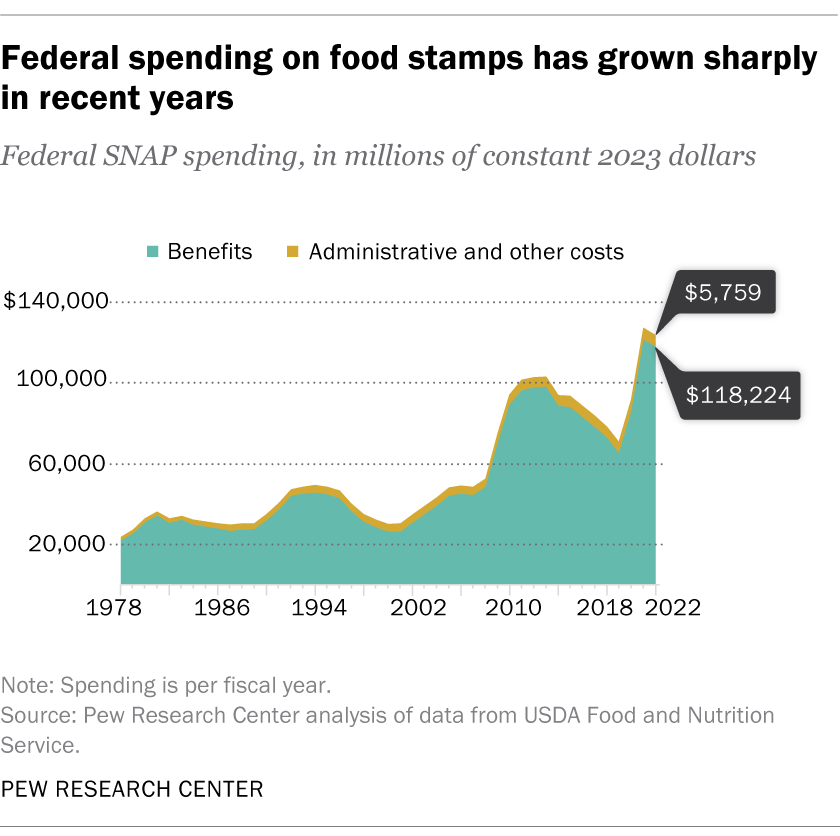
Additionally, the Pew Research Center reported that in April 2023, 41.9 million people in 22.2 million households received SNAP benefits, representing a total of 12.5% of the U.S. population. While the national average benefit was $181.72 per person and $343.00 per household, that was a sharp drop compared to February’s averages ($245.44 per person, $464.36 per household), following the expiration of the extra benefits put in place during the pandemic.
Food security is measured in the United States by using a survey tool developed by the USDA’s Economic Research Service, or the ERS. The survey tool consists of a series of questions that ask about the household’s food access, availability, and adequacy in the past 12 months. The questions cover various aspects of food insecurity, such as reduced food quality, variety, or desirability; uncertainty or anxiety about food access; insufficient food intake or disrupted eating patterns; and trade-offs between food and other basic needs.

If you want to learn more about the measurement of food security in the U.S., you can visit the ERS website or read the latest report on household food security in 2022. You can also explore interactive charts and graphs that show the trends and variations of food security across different groups and regions.
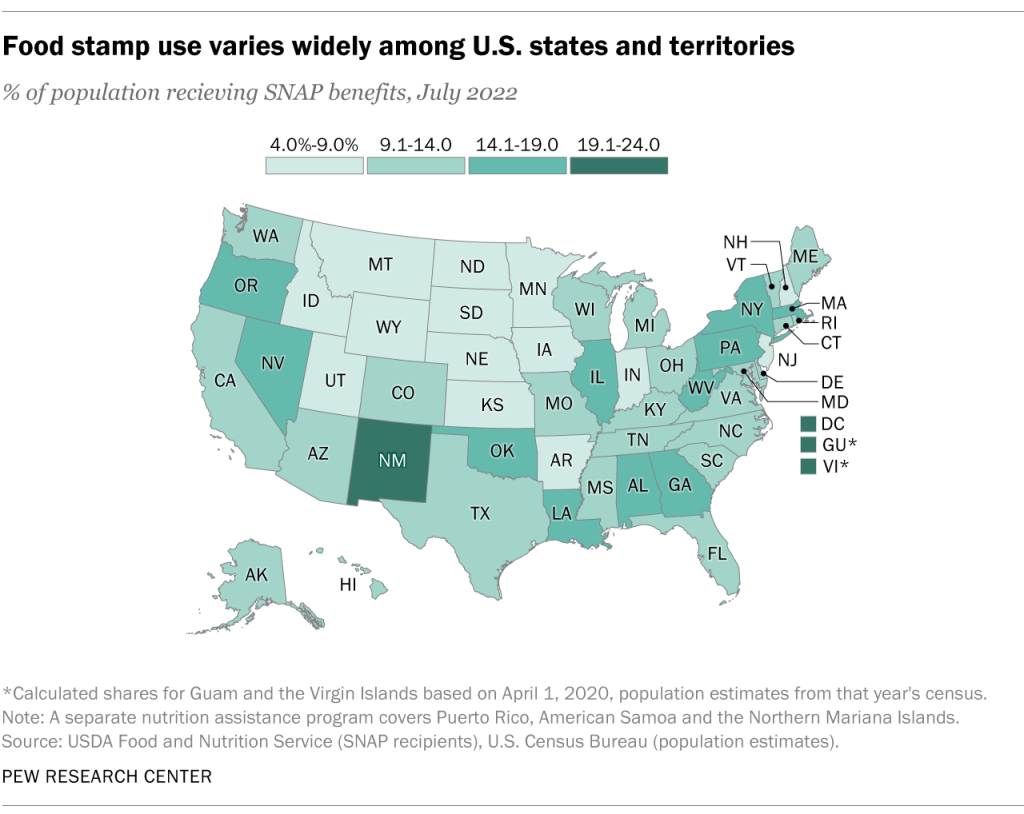
New Mexico receives the highest of any state, 22.9%. The District of Columbia is next-highest at 21.4%, followed by Oregon at 17.8% and West Virginia at 17.7%.
Despite this very crucial survey, there continue to be challenges and limitations in measuring food insecurity, such as data availability, reliability, and comparability; underreporting or overreporting of food insecurity; and cultural and contextual factors that influence food insecurity perceptions and responses.
Food security requires coordinated efforts from individuals, communities, governments, and organizations to ensure that everyone has access to sufficient, safe, nutritious, and culturally appropriate food. By addressing the root causes and consequences of food insecurity, we can create a more equitable and sustainable world for ourselves and future generations.

 Emily Frisan
Leave a reply to The Introduction | Food for Thought – Emily Frisan Cancel reply