
You Pay for Everything: Navigating the Culinary Landscape
Episode Five: Cultivating Cities: Gastrodevelopment, food, and heritage in Tucson, Arizona – Food for Thought with Emily Frisan
- Episode Five: Cultivating Cities: Gastrodevelopment, food, and heritage in Tucson, Arizona
- Episode Four: Hunger Exists in Every Zip Code
- Episode Three: You Pay for Everything: Navigating the Culinary Landscape
- Episode Two: Nourishing the Nation: Understanding Food Insecurity
- The Introduction | Food for Thought with Emily Frisan
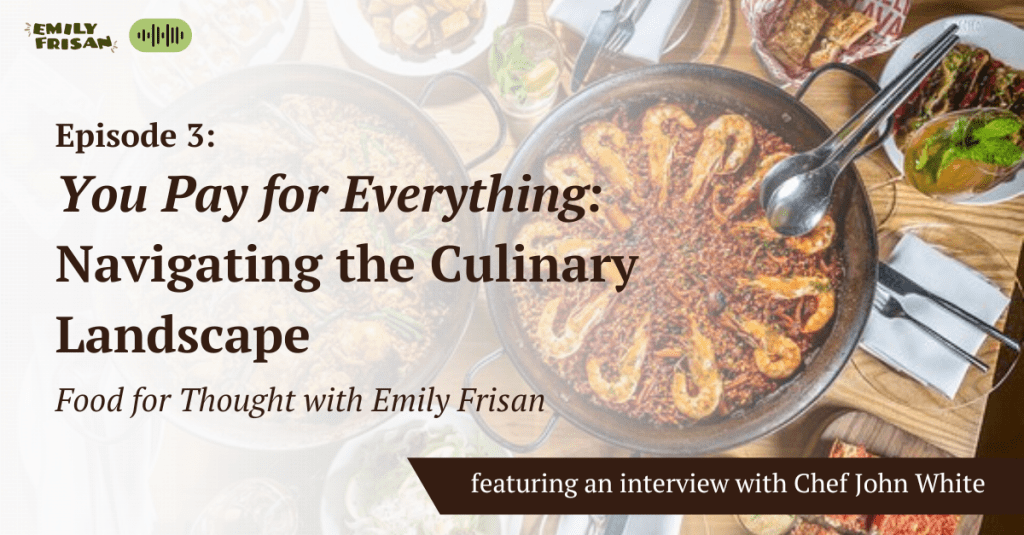
In this third episode, I delve into the critical issue of food waste, loss, and their impact in the United States. Join as I continue our exploration of how those working in the food system are making positive changes at every step.
Let’s differentiate between food loss and food waste:
- Food Waste: Refers to discarding or disposing of food that is still fit for human consumption at the retail or consumer level. Factors triggering waste include overproduction, overbuying, lack of awareness, confusion over date labels, and consumer preferences.
- Food Loss: Refers to the decrease in quantity or quality of food before it reaches the retail or consumer level. It can happen during production, post-harvest, processing, or transportation. Factors causing food loss include poor practices, strict cosmetic standards, and quality regulations.
Defining food loss and waste isn’t straightforward. There’s no universally accepted definition, and data on this issue is lacking. Organizations like the Food Loss and Waste Protocol aim to standardize reporting. However, studies are often concentrated in Europe, and the distinction between edible and non-edible food remains unclear.
To understand how the restaurant industry manages sourcing and reduces waste, I spoke with Chef John White from JALEO in Washington, D.C. Chef White emphasizes using every part of an ingredient, minimizing waste, and creating flavorful dishes. His culinary journey, from learning in family kitchens to working with iconic chefs, inspires us all.
Food should never hit the garbage—it should nourish people. Learn how we as listeners can adopt mindful practices, utilize scraps, and reduce waste both in restaurants and at home.
Subscribe to the show on Spotify!
Resources:
- DC Central Kitchen – https://dccentralkitchen.org/
- Jose Andres ThinkFoodGroup – https://joseandres.com/restaurants/
- JALEO Home Webpage – https://www.jaleo.com/
- Instagram @chefjwhite – any culinary questions, restaurant, or life inquiries – https://www.instagram.com/chefjwhite/
- Personal Website: http://emilyfrisan.com
- Twitter: https://twitter.com/emily_frisan
- LinkedIn: https://www.linkedin.com/in/emilyfrisan/
 Emily Frisan
Leave a comment